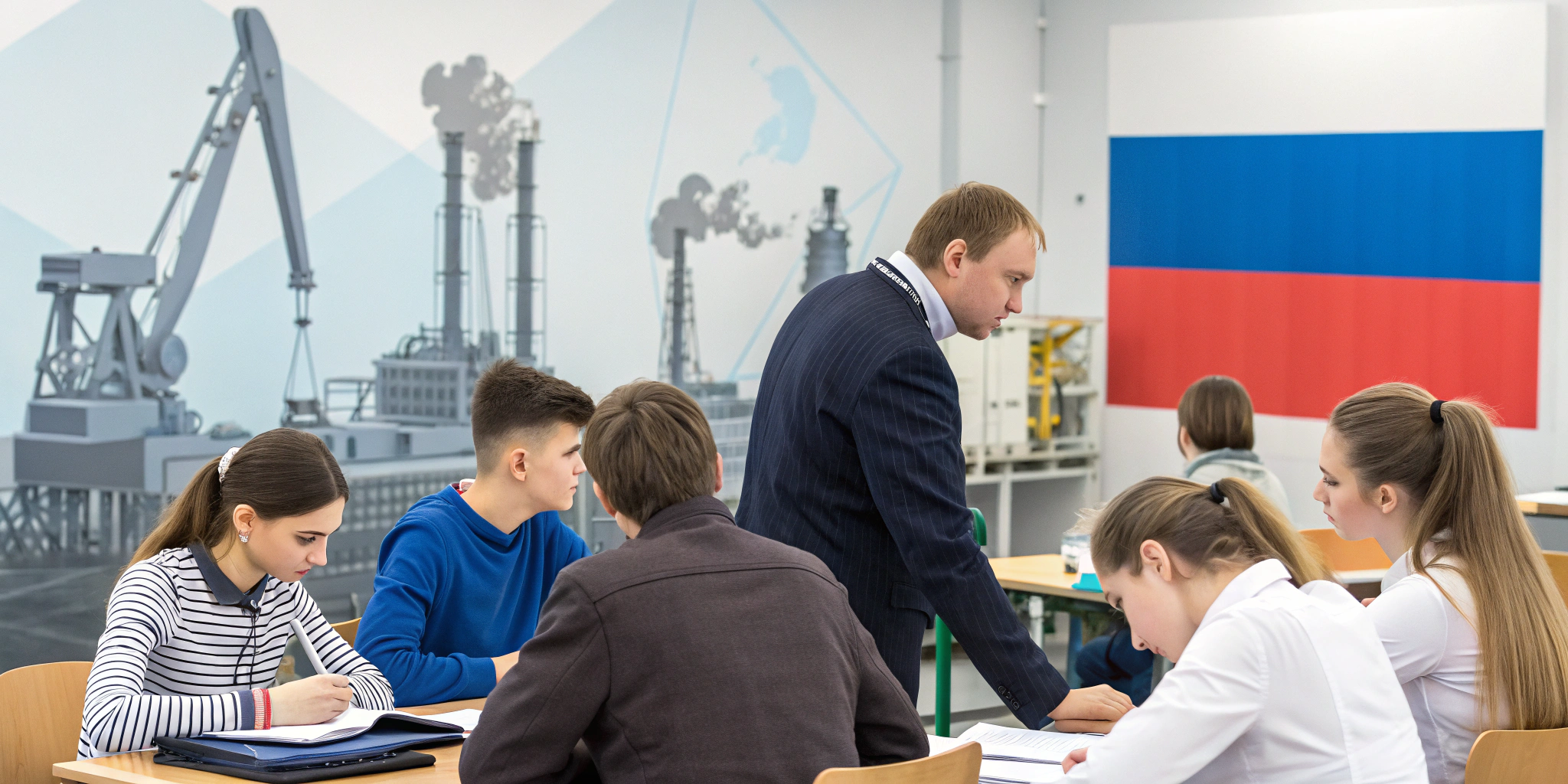
The Role of Education in Strengthening Production Sectors in Russia
Overview Key Areas of Production Educational Programs Case Studies Conclusion Take the Next StepOverview of Russian Education and Its Impact on Production
Russia boasts a robust educational framework, particularly in higher education, with numerous universities recognized globally for their academic rigor. Russian universities are pivotal in nurturing talents that fuel key production sectors through rigorous STEM education.
- Tradition in Engineering and Science: Russian institutions have a storied history of excellence in engineering and scientific research. The nation produces skilled graduates who contribute significantly to innovation in production technology.
- International Collaboration: Russia actively collaborates with educational institutions worldwide, promoting student exchange programs and joint research initiatives. This collaborative spirit enhances learning opportunities and broadens the global knowledge pool.
- Diverse Course Offerings: The educational programs in Russia are tailored to meet the demands of various production sectors. Degrees in mechanical engineering, energy systems, and agricultural sciences stand as exemplary pathways for students looking to impact production industries.
Key Areas of Production in Russia
While the focus of Study in Russia primarily lies in education, it is essential to recognize the critical industries that benefit from innovative educational outputs. The following sectors are pivotal to the Russian economy:
Energy and Manufacturing
The energy sector is a cornerstone of Russia's economy, contributing significantly to its GDP. Educational programs focused on energy engineering and management prepare students to navigate the complexities of this dynamic industry.
Key Aspects:
- Energy Engineering Programs: These programs emphasize renewable energy technology and sustainable practices. Graduates find careers in energy production, management, and innovation.
- Manufacturing Dynamics: With a focus on advanced manufacturing technologies, students are equipped with modern skills that are applicable in various industrial settings.
Agricultural Production
Russia's vast agricultural landscape is supported by educational degrees in agricultural sciences, focusing on sustainable development and innovative practices in farming.
Key Aspects:
- Food Production for the Future: Courses related to agricultural technology ensure that graduates are adept in modern agricultural practices, which are crucial for food security and sustainability.
- Research and Development: Universities frequently engage in research to develop new agricultural technologies that enhance yield and efficiency in production.
Educational Programs Supporting Production
As highlighted, Russian universities offer a plethora of programs specifically designed to prepare students for careers in production sectors. Here are some notable fields of study:
Mechanical Engineering
Mechanical engineering programs are designed to impart knowledge on machinery design, manufacturing processes, and automation. Students partake in hands-on projects that simulate real-world engineering challenges.
- Key Courses: Thermodynamics, Fluid Mechanics, and Robotics.
- Career Paths: Graduate engineers often find roles in automotive, aerospace, and manufacturing industries.
Energy Engineering
With the global push for sustainable energy sources, energy engineering programs are increasingly relevant. These courses focus on both traditional and renewable energy systems, preparing students to tackle contemporary energy issues.
- Key Courses: Renewable Energy Technologies, Energy Policy, and Smart Grid Technologies.
- Career Paths: Graduates can pursue careers in energy consultancy, renewable energy companies, or governmental energy agencies.
Agricultural Sciences
These programs focus on enhancing agricultural productivity while promoting sustainable farming practices. Students learn to innovate in food production methods, applying scientific knowledge to real-world farming.
- Key Courses: Agronomy, Soil Science, and Sustainable Agriculture.
- Career Paths: Graduates can work in fields such as agricultural research, farm management, or policy-making in food security.
The Interplay Between Education and Production: Case Studies
Case Study 1: The Rise of Russian Aerospace Engineering
Russian universities have established strong aerospace engineering programs that are integral to the country’s production capabilities in this high-tech sector. Graduates from these programs significantly contribute to the design and manufacturing of aircraft and spacecraft.
Collaborative Projects: Partnerships with aerospace companies allow students to work on live projects that bridge theoretical knowledge and practical application.
Case Study 2: Innovations in Agricultural Technology
Russia is home to cutting-edge research in agricultural technology, driven by partnerships between universities and agricultural businesses. Educational initiatives that foster innovation in this sector are a priority.
Research Initiatives: Programs focusing on research in genetic engineering and sustainable practices are gaining prominence, addressing urgent global food challenges.
Conclusion
The integration of education with production sectors is essential for fostering a skilled workforce that meets the demands of modern industries. Russian universities continue to play an instrumental role by preparing students through innovative programs that focus on engineering, energy, and agriculture. As international education becomes increasingly competitive, embracing the comprehensive offerings of Study in Russia can dramatically enhance recruitment efforts and educational strategies.
Take the Next Step with Study in Russia
We invite you to explore further the opportunities available through Russian education. Enhance your understanding of production sectors and foster global collaborations.