
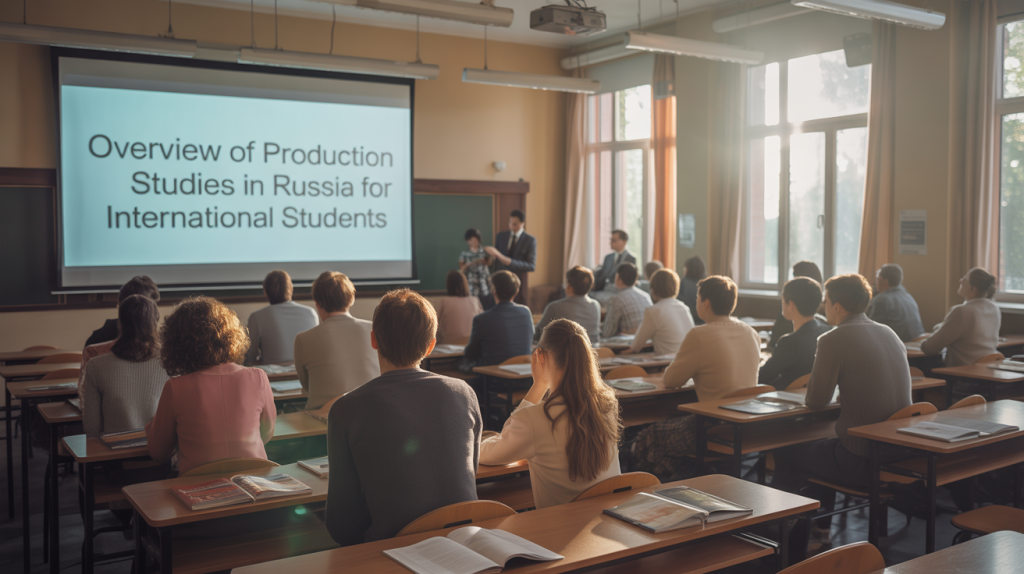
Overview of Production Studies in Russia: A Comprehensive Guide for International Students
Career Prospects
Study Options
Take the Next Step with Study in Russia
Main Fields of Production Education
Engineering, Manufacturing, and Production
Russia is home to several prestigious universities offering both bachelor’s and master’s programs in engineering, manufacturing, and production. These programs emphasize:
- Practical Orientation: Developed in collaboration with industry professionals to ensure relevance and applicability.
- Core Subjects: Curriculum often includes production management, industrial systems, and manufacturing technologies.
- Career Readiness: Programs are designed to prepare students for the evolving demands of both the Russian and international job markets.
With a strong emphasis on hands-on learning and practical skills, graduates emerge equipped to tackle future challenges in diverse sectors.
Management and Production Engineering
Management and Production Engineering programs are pivotal in cultivating skilled managers and specialists capable of optimizing production processes. Features of these programs include:
- Curricular Integration: A blend of engineering principles with management strategies, international business acumen, and cross-cultural communication skills.
- Career Opportunities: Graduates can advance into roles such as development director, manufacturing enterprise head, or managers within international departments of various organizations.
Film and TV Production
The artistic realm of Film and TV Production is also prominently represented in Russian universities. Key elements include:
- Comprehensive Curriculum: Focused on scriptwriting, dramaturgy, and production execution.
- Skill Development: Students learn to manage all phases of film and television projects, from initial concept development to final production stages.
Food Production
At the forefront of training specialists for the food processing industry is the Moscow State University of Food Production (MSUFP). This program highlights:
- Scientific Foundations: Emphasizing modern food technologies and managerial practices within the food sector.
- Professional Development: Offering specialized courses and workshops for those already employed in the food industry, fostering continuous learning and expertise.
Core Subjects and Practical Orientation
Across production-focused programs, core subjects are critical for student success. These subjects typically include:
- Fundamentals of Production Management: Offering students an understanding of how to effectively manage production systems and processes.
- International Business: Equipping students with the skills necessary to operate in a global business environment.
- Script Development: For film students, learning scriptwriting is essential for developing creative production outlines.
Moreover, Russian universities prioritize a practical orientation, which allows for:
- Internships: Hands-on experience in real industry settings.
- Industry Partnerships: Opportunities for collaboration with businesses to enhance learning experiences.
- Academic Mobility: Encouraging exchanges that broaden international exposure and enrich students’ educational journeys.
Career Prospects
Graduates from production studies in Russia enjoy a favorable job market across various sectors, including:
- Manufacturing: Skilled engineers and managers are in demand.
- Media: Increased job opportunities in film and television production.
- Food Processing: A growing need for professionals within food technology and management roles.
- Research and Education: Specializing in production also allows for career paths in academia and research institutions.
The interdisciplinary approach inherent in these programs ensures that graduates are well-equipped for diverse roles, positioning them for success in competitive career landscapes.
Study Options
International students can choose from a plethora of study options in Russia:
- Language of Instruction: Programs are available in both English and Russian, catering to a wide demographic of non-Russian speakers.
- Flexible Learning Formats: These include on-campus courses, distance learning, and blended formats, making it easier for students to tailor their education to their needs.
Additionally, many universities provide scholarship opportunities and international faculty engagement, enhancing the educational experience for all students.
Take the Next Step with Study in Russia
If you are exploring study options in Russia for programs in production studies, or if you represent an institution interested in collaboration, Study in Russia stands ready to assist. We invite you to reach out for partnership opportunities or more information on available programs that align with your goals. Let us support you in your journey towards academic and professional success in Russia.